Commission on the Science and Technology for Development
Topic Summary: Cryptocurrency Regulation
Cryptocurrency has grown from a niche technology on someone's PC in a basement into a multi-trillion-dollar global market. But because it crosses borders instantly without needing a bank's or government's approval, no single country can regulate it alone, making it a modern issue of world politics that forces bodies like the FATF, G20/FSB, IMF, and OECD to coordinate rules on money laundering, financial stability, and taxation across very different economies. Wealthier nations like the U.S. and EU have built comprehensive frameworks (the GENIUS Act and MiCA) focused on stablecoin oversight and consumer protection, while China has banned crypto outright in favor of its state-controlled digital yuan, and many developing economies have embraced looser regulation since crypto offers financial inclusion and cheaper remittances where banking is weak. However, this creates a dependency problem, since most major stablecoins are backed by USdD meaning smaller countries risk tying their financial systems to U.S. monetary policy and losing control over their own currency. Cybersecurity failures at exchanges and stablecoin issuers add further risk, as hacks and collapsed reserves have repeatedly wiped out billions overnight, raising fears of an international financial crisis. Ultimately, delegates must weigh innovation against stability, decide how much regulatory power states should cede internationally, protect smaller economies from dependency and systemic risk, and determine what minimum global standards should govern security, oversight, and crisis response in a modern era.
Dear Delegates,
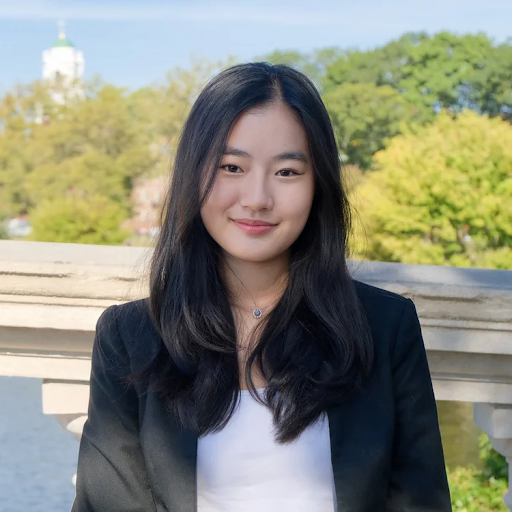
My name is Claire Cao, and I am honored to serve as your Director for the Commission on Science and Technology for Development at HMUN 2026! I am a second-year at Harvard studying Applied Mathematics and Government, originally from Portland, Oregon. I began Model United Nations in high school and later served as Secretary-General of Oregon’s Model UN Conference. At Harvard, I have been an Assistant Director for both HMUN and HNMUN and now compete on the
Intercollegiate Model UN Team. Outside of MUN, I am involved in the Harvard Association for U.S.-China Relations, I’m Co-President of the Harvard Undergraduate Figure Skating Club, and an Associate with the Harvard Undergraduate Consulting on Business and the Environment. In my free time, I enjoy hiking, exploring cafes around Boston, traveling, and spending time with my cat. Through my academic and extracurricular experiences, I have developed a strong interest in the intersection between science, technology, and policy. I encourage you to bring thoughtful, creative, and innovative ideas to this committee while collaborating to produce impactful, well-balanced solutions in a new digital age.
Best,
Claire Cao
Director, Commission on the Science for Technology and Development
cstd@harvardmun.org
Harvard Model United Nations 2027