Liberty or Security: House Homeland Security and Governmental Affairs, 2002
Topic Summary
Homeland Security Congressional Committee 2002 will be a dynamic, fast-paced committee taking place at the historical intersection of foreign and domestic policy within the United States.
In the aftermath of the September 11, 2001 terrorist attacks, the United States faced an urgent need to rethink its national security system. The attacks revealed major weaknesses in intelligence sharing, airport security, border control, emergency response, and coordination between federal agencies. In response, Congress passed the Homeland Security Act of 2002, creating a new homeland security framework in response to the September 11 attacks. However, this was not the end of the story. As the Bush administration expanded federal counterterrorism powers, Congress faced growing questions about oversight, accountability, and possible government overreach.
The House Committee on Homeland Security is a committee of the United States House of Representatives. The committee may amend, approve, or table homeland security-related bills. It also has the power to hold hearings, conduct investigations, and subpoena witnesses. Additionally, the committee has authorization and policy oversight responsibilities over the Department of Homeland Security. In this committee, these powers will be central as delegates examine the actions of the executive branch and the agencies created or expanded in the name of national security.
Delegates must examine whether the executive branch has exceeded its authority in the name of national security. Key concerns include expanded surveillance, detention of suspected terrorists, treatment of immigrants and non-citizens, secrecy in intelligence operations, and the balance of power between Congress and the President.
Supporters of the Bush administration argue that extraordinary threats require strong executive action and rapid decision-making. Critics warn that fear of terrorism has been used to justify violations of civil liberties, weak congressional oversight, and policies that may undermine constitutional protections. As a result, delegates must determine how Congress should oversee homeland security policy without weakening national security. The committee should consider investigations, reporting requirements, limits on executive authority, protections for civil liberties, and mechanisms to hold federal agencies accountable. The central challenge is deciding how the United States can defend itself while preserving the democratic principles it claims to protect.
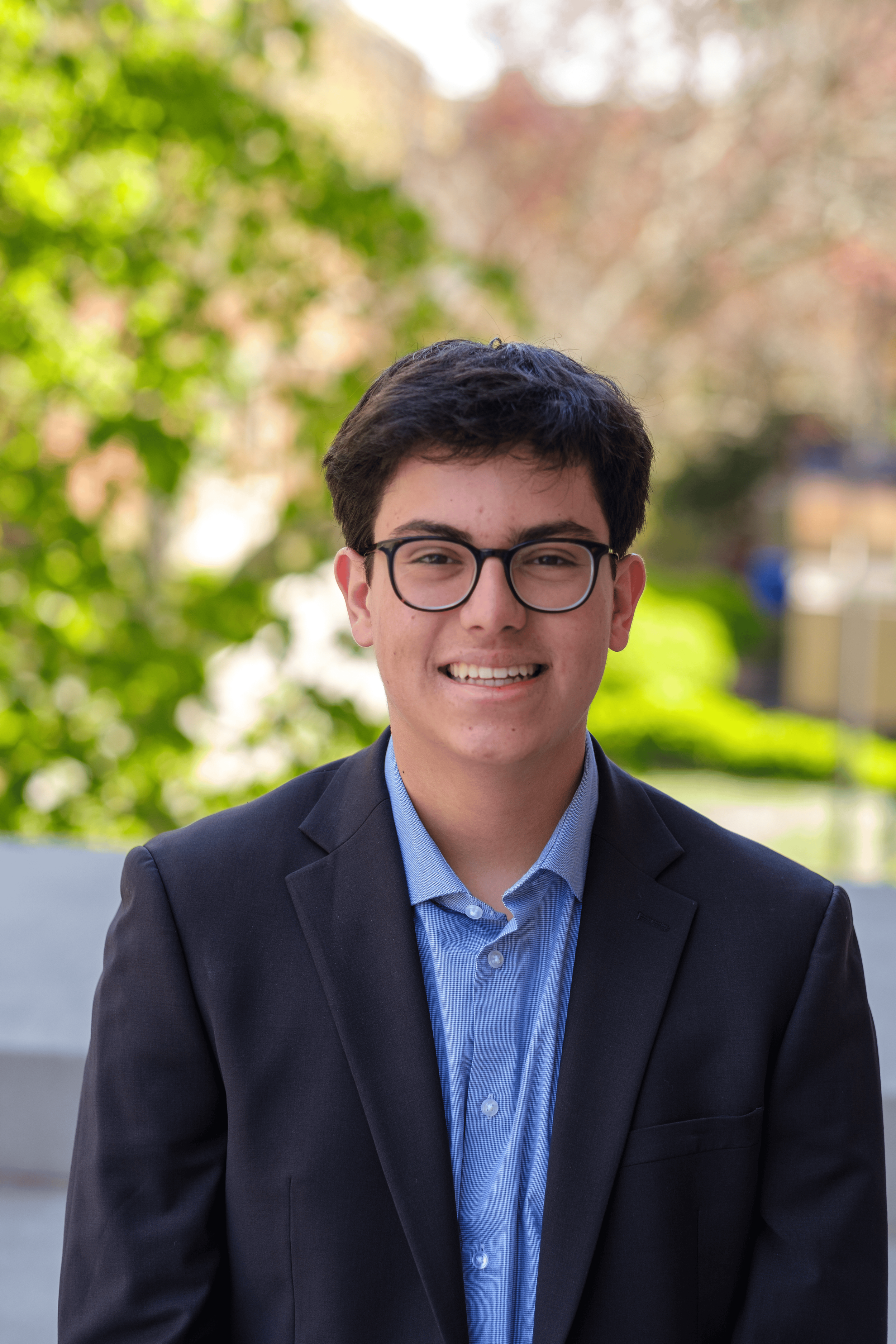
Dear Delegates,
My name is Juan Wulff. I am a sophomore living in Leverett House studying Social Studies born in Venezuela and living in Boston. Model UN became an important part of my life when I came to college, largely because many of my friends were involved in it. Although I never expected to participate in Model UN at the college level, it has become one of the most exciting and rewarding parts of my Harvard experience. I am a member of IC-MUN, Harvard’s competitive Model UN team, and I had the opportunity to compete with them throughout this past year. I also staffed the Roman Senate committee at HNMUN, and at HMUN, I directed a future-focused General Assembly committee. That experience was especially meaningful to me. It was incredibly rewarding to meet delegates, watch them grow over the course of the committee, and have a great time on top of that.
Aside from Model UN, I am deeply involved with the Harvard Public Opinion Project, Harvard’s youth poll of young Americans across the country. I am also involved with the Harvard International Review, where I serve as Head of Solicits and help conduct interviews with prominent voices in international affairs.
I am here for you every step of the way, from the early stages of your research to the final moments of committee. Please feel free to reach out to me with any questions, whether they are about Model UN, Harvard, or anything else you would like to discuss. I am so excited to meet you all, and I look forward to seeing the energy, preparation, and creativity that you bring to the committee.
Best,
Juan Wulff
Director, House Homeland Security and Governmental Affairs, 2002
house@harvardmun.org
Harvard Model United Nations 2027
Hi Delegates!
My name is Jake Truncale; I am a senior at Harvard College studying Government with a secondary in European History, Politics, and Societies. I am originally from Long Island, New York. I am so excited to serve as your crisis director!
Much like all of you, I competed in MUN throughout high school and I now compete for Harvard’s competitive MUN team, ICMUN. I have also directed and assisted at various iterations of both HMUN and HNMUN, our collegiate conference.
Outside of Model UN, I spend a lot of time on music. I just finished my term as President of the Harvard Glee Club; I also play guitar and saxophone. I am quite the theater and opera nerd, so if music or theater is of interest I am always happy to discuss!
I cannot wait to meet all of you soon; HMUN 2027 is sure to be a blast! I look forward to helping you bring your crisis arcs to life! As someone who has been in your shoes, I am excited to make this as fun and rewarding an experience as possible. In the meantime, please reach out if you have any questions or concerns, we are committed to making this experience the best it can be!
Sincerely,
Jake Truncle
Crisis Director, House Homeland Security and Governmental Affairs, 2002
house@harvardmun.org
Harvard Model United Nations 2027