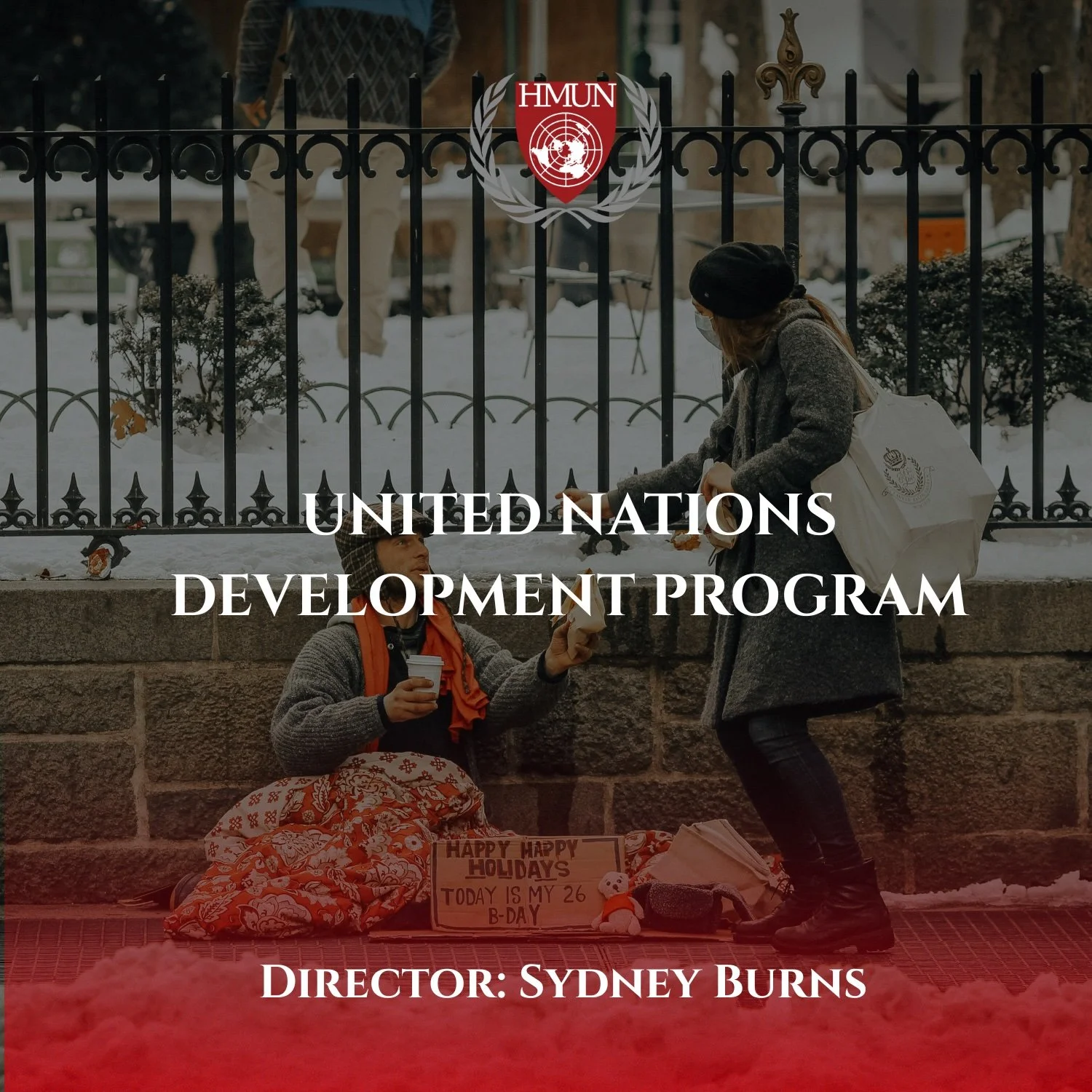
United Nations Development Programme
Topic A: Financing climate adaptation in vulnerable states
Topic B: Building digital infrastructure in developing countries
Topic A: Financing Climate-Vulnerable States
Climate change poses an increasing threat to economic development, particularly in states that contribute the least to global greenhouse gas emissions yet face the greatest climate risks. Rising sea levels, extreme weather events, food insecurity, and infrastructure damage place growing financial pressure on many developing countries, often limiting their ability to invest in long-term resilience. This committee will examine how the international community can strengthen climate finance through grants, concessional lending, debt relief, private investment, and multilateral development institutions while ensuring that funding is accessible, transparent, and responsive to local needs. Delegates will also consider issues including adaptation, loss and damage, disaster preparedness, and equitable access to financing.
Topic B: Expanding Public Digital Infrastructure in Developing States
Digital public infrastructure has become an increasingly important component of economic development and effective governance. Digital identity systems, payment platforms, broadband networks, and online government services can improve financial inclusion, expand access to healthcare and education, and increase the efficiency of public administration. However, many developing states continue to face challenges including limited connectivity, inadequate technical capacity, cybersecurity risks, and unequal access to digital technologies. This committee will explore how governments, international organizations, and development partners can support secure, inclusive, and interoperable digital infrastructure while protecting privacy and reducing the digital divide.

Dear Delegates,
My name is Sydney Burns and I am super excited to serve as your director of the UNDP this year at HNMUN 2027! I am from Milton, Massachusetts which is a suburb just south of Boston. At Harvard, I am planning on studying either Social Studies or Government, with a citation in French. I especially have a keen interest in international development, which is what drew me to UNDP in the first place. Other than Model UN, here at Harvard I’m involved with the Public Opinion Project, the Harvard Organization for Prison Education, Harvard Model Congress, and serving as the clerk for Harvard’s International Relations Council. In my free time, I love to go on long walks, get sweet treats with my friends, and swim recreationally.
Model UN has been a huge part of both my high school and college experiences. I competed all four years in high school (and even attended HMUN as a delegate three times!), and here at Harvard I’ve been able to travel across the country attending conferences with our competitive team, ICMUN. I have always preferred GA committees, and have a special love for the chaos a double delegate committee brings. I also have extensive staffing experience, serving as an Assistant Director at HMUN and HNMUN last year, serving as a Director at HMUN China 2026, and also serving as a Director at HNMUN 2027(our college conference). Simply put, I love the bonds I have made and the culture I have interacted with throughout my Model UN career. I can’t wait to take my enthusiasm for Model UN to HNMUN 2027 and direct the UNDP committee this year!
Our two topics, exploring financing climate vulnerable states and expanding public digital infrastructure, offer fruitful pathways for exploration and debate. I am deeply excited to delve into these complex and pressing topics with you all this February. I expect our topics to yield lively debate and creative resolutions. Throughout the committee, I expect that all delegates will keep their conduct positive and help create a constructive environment. I am always happy to help both in committee and ahead of time.
I look forward to meeting all of you!
Best Regards,
Sydney Burns
Director, United Nations Development Programme
undp@harvardmun.org
Harvard Model United Nations 2027