UNESCO
Topic Summary
Every child has the right to a proper education—not only for their personal benefit by fostering critical thinking and skill development, but also for the enhancement of civic engagement, improvement of societal living standards, and macroeconomic growth.
Nowadays, the Latin American continent faces significant challenges that impede children from attaining this basic human right, therefore impairing their present, their future, and that of their communities. From a historical standpoint, disparities based on income, geographic location (urban as opposed to rural zones), and ethnicity (particularly targeting indigenous communities and those of Afro-American descent) have been long standing and often rooted in the colonialism background that characterizes Latin American countries. Enduring structural inequalities, along with marginalization of communities, and the lack of proper infrastructure and qualified teachers have contributed to the 9.6 million children and adolescents in the region who are out of school, according to a 2024 UNESCO report. In Guatemala (2021), over 50% of indigenous children were unable to complete primary school, due, among other factors, to language barriers. In Brazil, unequal funding disproportionately affects students of Afro descent in the Favelas. In Peru, there is poor access to education and high rates of child labor in remote mountain regions of los Andes.
Likewise, widespread violence from drug cartels, gang warfare (e.g., MS-13 and Barrio 18 in Central America), and paramilitary groups has made attending school unsafe in parts of Mexico, El Salvador, Honduras, Colombia, Venezuela, and Brazil. Children are often forced to drop out of school due to fear, displacement, or because families flee their hometowns (toward the U.S. or within Latin America), creating education disruptions among migrant and refugee children, as well as severe psychological traumas and the endangering of their wellbeing.
The purpose of this UNESCO committee is to Bridge Educational Gaps for Marginalized Communities and Protect the Right to Education Amid Violence and Displacement in Latin America. Delegates will focus on studying the present and analyzing the past in order to create innovative and feasible solutions. Receiving an education characterized by quality and inclusivity is a cornerstone for building a better future—one where a child’s smile can thrive.
Esteemed Delegates,
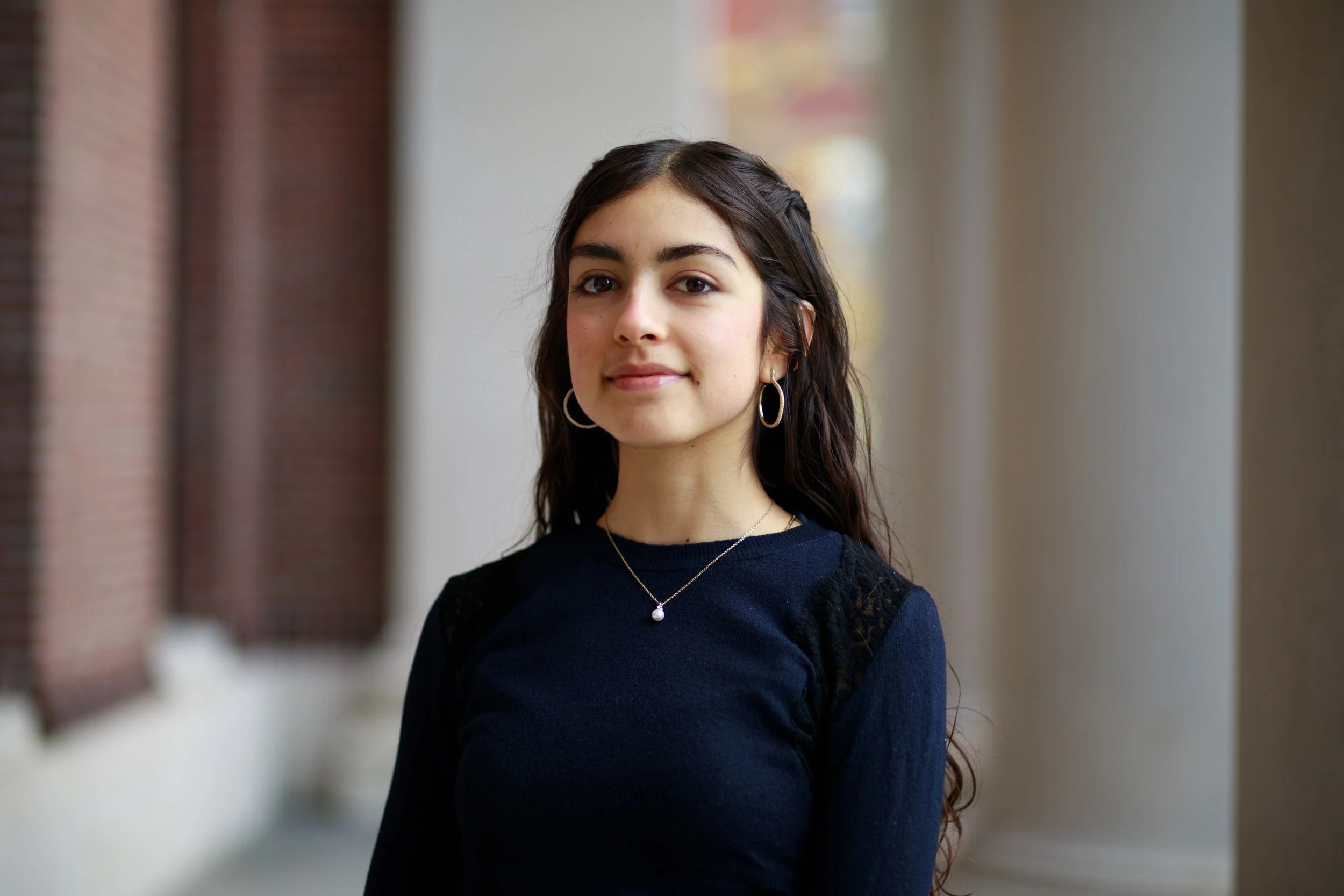
Welcome to the Boston Harvard Model United Nations 2026 Conference. My name is Nicole Hernandez, and I am honored to serve as your director for the United Nations Educational, Scientific and Cultural Organization (UNESCO) Committee. I am sure that each and every one of you will bring sound arguments and unique perspectives to our committee, and I am very much looking forward to the debate that will come to life as you grow, learn, and collaborate together.
I am a rising junior at Harvard College concentrating on Economics with a secondary in Math. I was born and raised in Guadalajara, a beautiful city in the west of Mexico that vibrates with tradition, music, and culture. When I turned sixteen years old, my family moved to Portland, Oregon, in pursuit of a better education for my two siblings and I. Encouraged by my enthusiasm for literature and writing, I started getting involved in journalism and Speech and Debate during high school in Portland. As I continued developing in the world of advocacy, my passion to defend children’s rights evolved into an interest for the relationship between education and economic mobility, which I hope to further explore in my college career.
At Harvard, I am the Comp Director for the Design Board of The Crimson, a calculus course assistant for the Math Department, and part of the Harvard Candela Latin Dance Troupe. I served as an Assistant Director for the FIFA World Cup Committee at HMUN Boston 2025 and as a General Assembly Director at HMUN China 2025.
The current educational crisis is multifaceted and intrinsically complex. Much has been written and said regarding the topic—the present background guide could well be over a hundred pages long—and it has been at the forefront of the efforts for the world’s sustainable development since the very birth of the United Nations, as well as fought for even before. Therefore, as you prepare for the conference, I encourage you to explore as much as possible: there is a lot to be read, learned, and discovered. Take this opportunity to try to understand what is at stake and what the heart of the problem is, all the while satisfying your own curiosity.
Once you reach the conference, I encourage you to speak up as much as possible. Show what you have discovered, what you think, what you hope to bring to the table. I want each and every one of the delegates to contribute to the discussion, such that the debate truly becomes a means for finding solutions and sparking transformation. Listen, analyze, participate, and respect. Those are the values that diplomacy must always be guided by.
I am confident we will all come together for an unforgettable conference, and cannot wait to meet you all, get to know each other, and tackle the educational issue together. Cheers for the times ahead!
Sincerely,
Nicole M. Hernández Abud
Director, UNESCO Committee
unesco@harvardmun.org
Harvard Model United Nations 2026