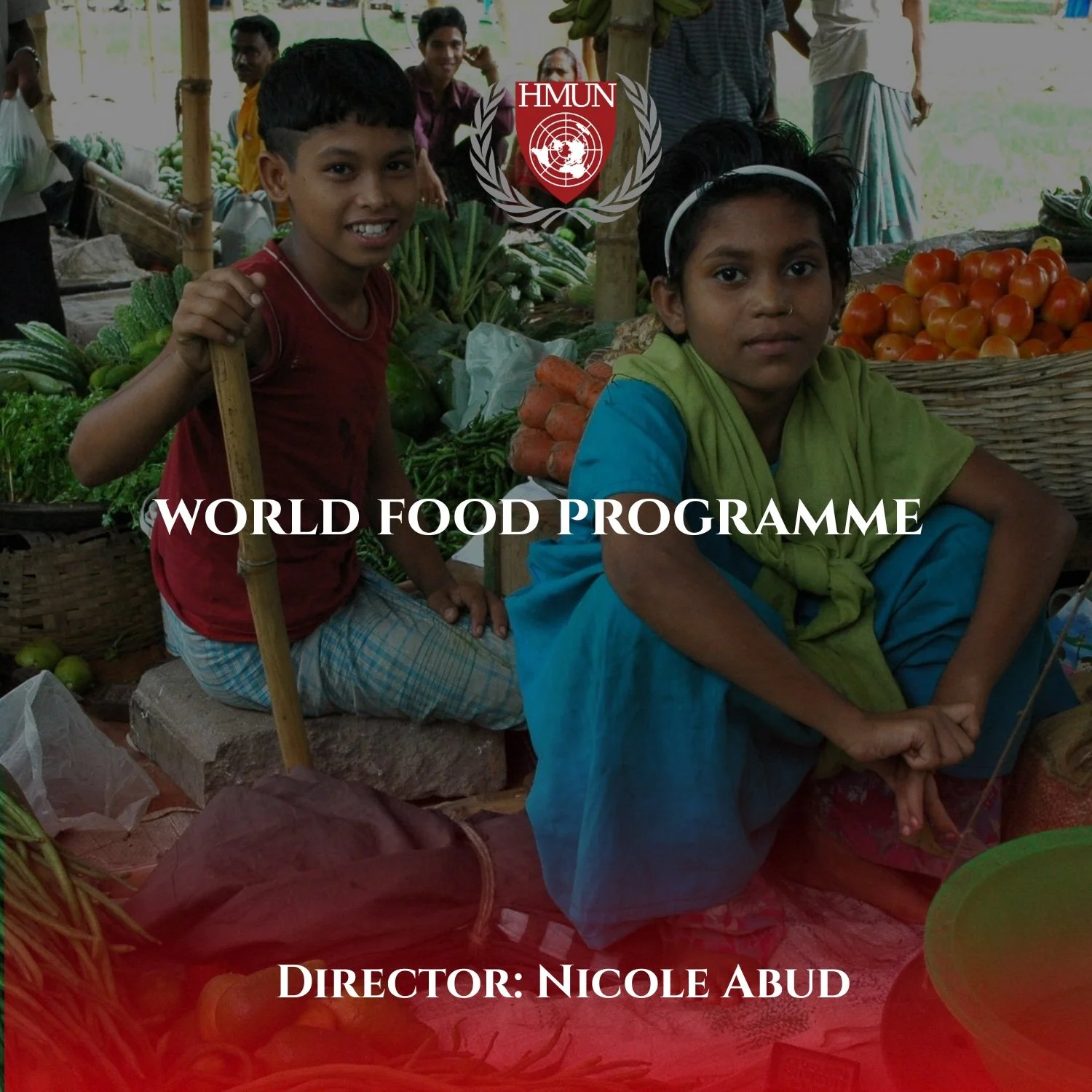
World Food Programme
Topic A: Strengthening Short-Term Economic Mechanisms for Food System Resilience in the Aftermath of Natural Disasters
Topic B: Exploring Long-Term Agricultural Reconstruction, Rural Livelihood Recovery, and Structural Food Insecurity on Disaster-Hit Economies
Natural disasters are devastating in ways that extend far beyond immediate physical destruction, from dealing with grief to reconstructing cities, organizing economies, and fixing food systems. The latter is often overlooked, but key to safeguarding those affected and rebuilding lives. When earthquakes, floods, and cyclones strike, they simultaneously rupture supply chains, spike food prices, displace farmers and traders, and wipe out the productive assets that vulnerable communities depend on for their livelihoods. In the critical days and weeks following a disaster, the World Food Programme deploys a range of short-term economic mechanisms, including cash-based transfers, food vouchers, and emergency market support, to stabilize food access before longer-term recovery can begin. From the debris of the 2010 Haiti earthquake to the submerged agricultural fields of the 2022 Pakistan floods and the compounded crises of 2025 Myanmar, the challenge of delivering effective, timely economic interventions in chaotic post-disaster environments has only grown more urgent as climate change increases both their frequency and severity.
Yet the tools available to the WFP are only as effective as the systems they operate within. Cash transfers fail without functioning markets; digital payment systems exclude the elderly, women, and rural populations without mobile access; and coordination among hundreds of humanitarian actors routinely breaks down in the critical first ninety days. Delegates in this committee will grapple with some of the most pressing questions in humanitarian economics: When should the WFP deliver food directly, and when should it put cash in people's hands? How can preventative financing close the gap between when disasters strike and when funding arrives? And how can the WFP better integrate its emergency mechanisms with national governments' existing social protection systems to reach the most vulnerable faster? The answers will shape the future of food security in an increasingly disaster-prone world.
Esteemed Delegates,
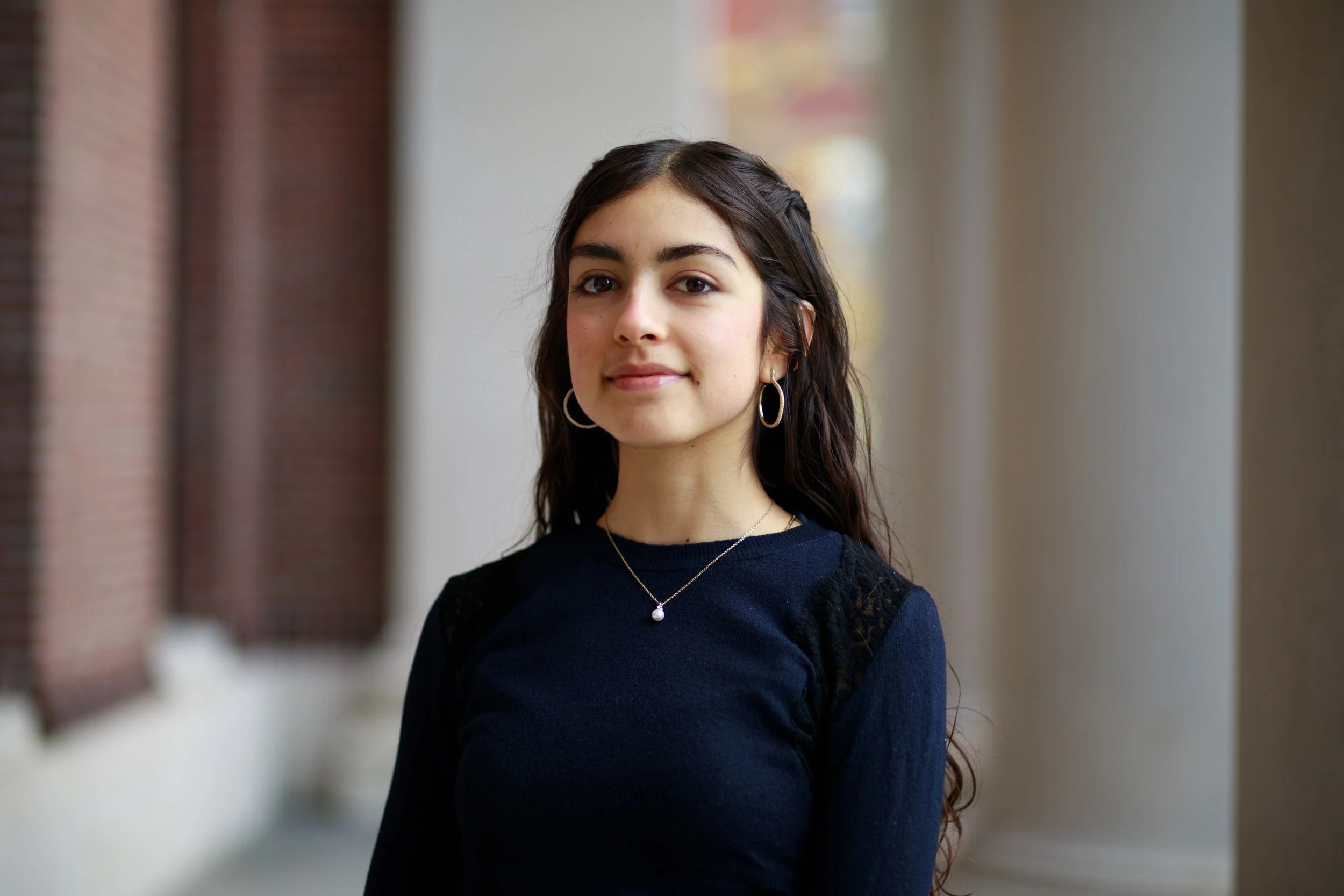
Welcome to the Boston Harvard Model United Nations 2027 Conference! My name is Nicole Hernández, and I am honored to serve as your director for the World Food Programme (WFP). I am confident that each of you will bring sound arguments and unique perspectives to our committee, and I look forward to the debate that will unfold as you grow, learn, and collaborate together.
I am a senior at Harvard College, concentrating in Economics with a secondary focus in Math. I was born and raised in Guadalajara, a beautiful city in western Mexico that vibrates with tradition, music, and culture. When I turned sixteen, my family moved to Portland, Oregon, in pursuit of a better education for my two siblings and me. Encouraged by my enthusiasm for literature and writing, I started getting involved in journalism and Speech and Debate during high school in Portland.
At Harvard, I have served as the Comp Director for the Design Board of The Crimson, a calculus course assistant for the Math and Economics Departments, and I am part of the Harvard Candela Latin Dance Troupe. I served as a General Assembly Director at HMUN China 2025 and HMUN Boston 2026.
The current educational crisis is multifaceted and intrinsically complex. Much has been written and said regarding the topic—the present background guide could well be over a hundred pages long—and it has been at the forefront of the efforts for the world’s sustainable development since the very birth of the United Nations, as well as fought for even before. Therefore, as you prepare for the conference, I encourage you to explore as much as possible: there is a lot to be read, learned, and discovered. Take this opportunity to try to understand what is at stake and what the heart of the problem is, all the while satisfying your own curiosity.
Once you reach the conference, please speak up as much as possible. Show what you have discovered, what you think, what you hope to bring to the table. I want every delegate to contribute to the discussion, so that the debate truly becomes a means for finding solutions and sparking transformation. Listen, analyze, participate, and respect. Those are the values that diplomacy must always be guided by.
I am confident that we will all come together for an unforgettable conference, and I look forward to meeting you, getting to know each other, and tackling the educational issues together. Cheers for the times ahead!
Sincerely,
Nicole M. Hernández Abud
Director, World Food Programme
wfp@harvardmun.org
Harvard Model United Nations 2027