Disarmament and International Security Committee
Topic Summary
Dubbed the “third revolution in warfare, after gunpowder and nuclear arms,” lethal autonomous weapons systems (LAWS) use artificial intelligence and deep machine learning to locate, identify, and engage targets with minimal or no human oversight. While proponents praise the reduction in human cost and logistical military advantages of LAWS, opponents cite moral concerns and the risk of uncontrolled escalation as reasons to preemptively ban their development. The stakes are high in both camps of argument; the integration of autonomous weapons into armies can slash military costs by almost one fourth and significantly decrease the number of human casualties. However, it is also not difficult to imagine the dystopian worst case scenario: technology whose intelligence and capabilities grow more quickly than any international arms race. Despite its sensationalist elements, the Future of Life Institute’s 2017 anti-LAWS video “Slaughterbots” shows the risks of unmitigated and unregulated advancements in potentially life-threatening technologies. Morally, there are arguments in favor of both sides; LAWS can be expected to act more systematically and reduce the burden of consciousness on humans, but one must question whether non-human agents should be given the power to make life-or-death decisions, given that LAWS could violate the Principle of Distinction by failing to distinguish civilians from combatants.
Shortly after a group of non-governmental organizations (NGOs) collectively formed the Campaign to Stop Killer Robots in 2013, the Convention on Conventional Weapons (CCW) issued a mandate to start dialogues on LAWS. In November 2017, the CCW Group of Governmental Experts on Lethal Autonomous Weapons Systems convened for the first time to discuss emerging technologies, their military effects, and possible legal and ethical implications. The group met again in April 2018 and agreed to start developing a legally binding instrument on LAWS in November. These developments bring to light a key concern: technology is still evolving at a faster rate than international regulation, which is a breeding ground for gray-areas and uncertainty.
Historically, the international community has failed to take preemptive and preventive measures against life-threatening technological advancements; regulations usually crystallize after the fact, which has led to widespread loss of life. The emergence of LAWS is a multifaceted issue that has not received as much attention as higher-profile security issues, but is no less important for it. In this committee, delegates will be tasked with creating an international framework to address the forces that will influence the development and eventual deployment of LAWS: geopolitical tensions, private sector activity driven by capitalistic objectives, and the pace of technological development. Additionally, delegates must consider possible ethical and moral implications, as well as the relationship between cybersecurity and potential complications of LAWS. By considering historical precedents and the possible trajectory of future developments, you will develop final recommendations that will determine the future of warfare itself, and the life of every individual on this earth.
Dear Delegates,
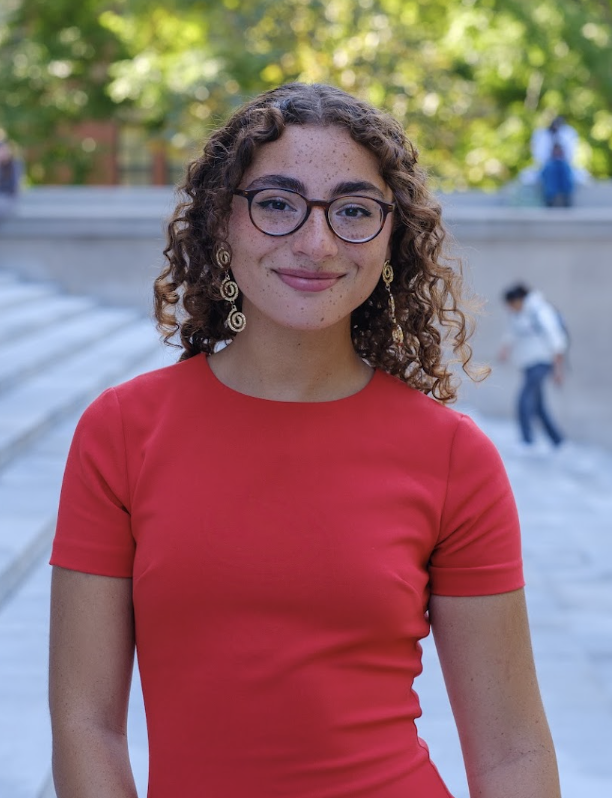
My name is Lucia Gallo, and I am so excited to be your director as part of HMUN Online 2025! I’m originally from New York City, and I have been doing Model UN since my freshman year of high school. I’m a current junior at Harvard studying Government and Economics, and I’m especially interested in international relations (what a surprise) and the policymaking process. When I’m not traveling for Model UN, I love playing New York Times games, doing word search puzzles, and trying new restaurants in Boston with friends!
I’m currently one of ICMUN’s Head Delegates and the Under-Secretary General for the General Assembly at our high school conference, HMUN. I’ve staffed both HMUN and HNMUN for the past two years and will be staffing Harvard’s international Model UN conferences in Asia and Africa this upcoming year!
Within committee, I hope to cultivate a welcoming, collaborative environment that fosters creative ideas and lively debate. Throughout the weekend, I’ll be looking for delegates who balance leadership with collaboration, well-researched solutions with innovation, and consistency with flexibility. I am absolutely ecstatic to be your Director for HMUN Online 2026. If you have any questions, please feel more than free to reach out!
Sincerely,
Lucia Gallo
Dear Delegates,
Welcome to the DISEC Committee at HMUN Online 2025! It is an honor to serve as your Director, and I’m incredibly excited for the thoughtful conversations, collaborative problem-solving, and innovative diplomacy we’ll share over the course of the weekend.
My name is Saarah Hassan, and I’m a freshman at Harvard College studying Government with a minor in Global Health and Health Policy. I’m originally from Mankato, Minnesota, a small city in southern Minnesota. While my high school didn’t have a Model UN program, I found other ways to use my voice and build leadership skills through Speech and Student Government. When I arrived at Harvard, I joined the Intercollegiate Model UN (ICMUN) team, where I’ve had the opportunity to travel across states and countries to compete and connect with an incredible community of globally-minded peers. I previously directed the NATO 1955 committee at HMMUN 2024, directed at HMUN India 2025, and HMUN Dubai 2026, and I’m thrilled to be directing this year for HMUN online.
Outside of MUN, I’m involved in Harvard’s theater scene, help lead publicity for the World Pre-Health Conference, and serve as the Director of GA Training for the ICMUN team. I also work with the Internal Relations Board for Youth Lead the Change. Each of these experiences has deepened my appreciation for how communities thrive when young people come together to learn, lead, and create.
Please don’t hesitate to reach out with any questions. I look forward to meeting you all soon!
Warm regards,
Saarah Hassan