Economic and Financial Committee
Topic A: Global Governance of Informal Economies
Topic B: Taxing Multinational Corporations in a Fragmented Economy
The informal economy encompasses all economic activity that operates outside official government regulation, taxation, and legal protection. It includes everything from street vendors to domestic workers to small-scale farmers, gig workers without formal contracts, and countless micro-enterprises that sustain the livelihoods of billions of people worldwide. In many developing countries, the informal sector accounts for a substantial share of employment and economic output, serving as a vital source of income where formal jobs are scarce and the barriers to entry are high. However, informality also leaves workers without labour protections, social security, healthcare, or legal recourse while reducing governments' ability to collect tax revenue and provide public services.
The challenge facing delegates is therefore not simply to eliminate informality, but to determine how governments can encourage greater work protections while safeguarding livelihoods and promoting inclusive economic growth. Delegates must also consider how international institutions, national governments, and the private sector can work together to create incentives for businesses and workers to transition into the formal economy, whilst supporting them through this process.
The rapid expansion of multinational corporations/ MNCs has transformed the global economy, enabling businesses to operate seamlessly across multiple jurisdictions. While this has driven investment, innovation, and economic growth, it has also exposed significant weaknesses in the international tax system. Many multinational enterprises are able to shift profits to low-tax jurisdictions, reducing the tax revenues available to governments even when substantial economic activity occurs elsewhere. This phenomenon has intensified debates surrounding tax equality, state sovereignty, and the distribution of economic gains in an increasingly globalised world. The central challenge for delegates, consequently, is to examine how the international community can create a fairer and more effective framework for taxing multinational corporations while respecting national sovereignty and maintaining an attractive environment for investment.
Hi Delegates!
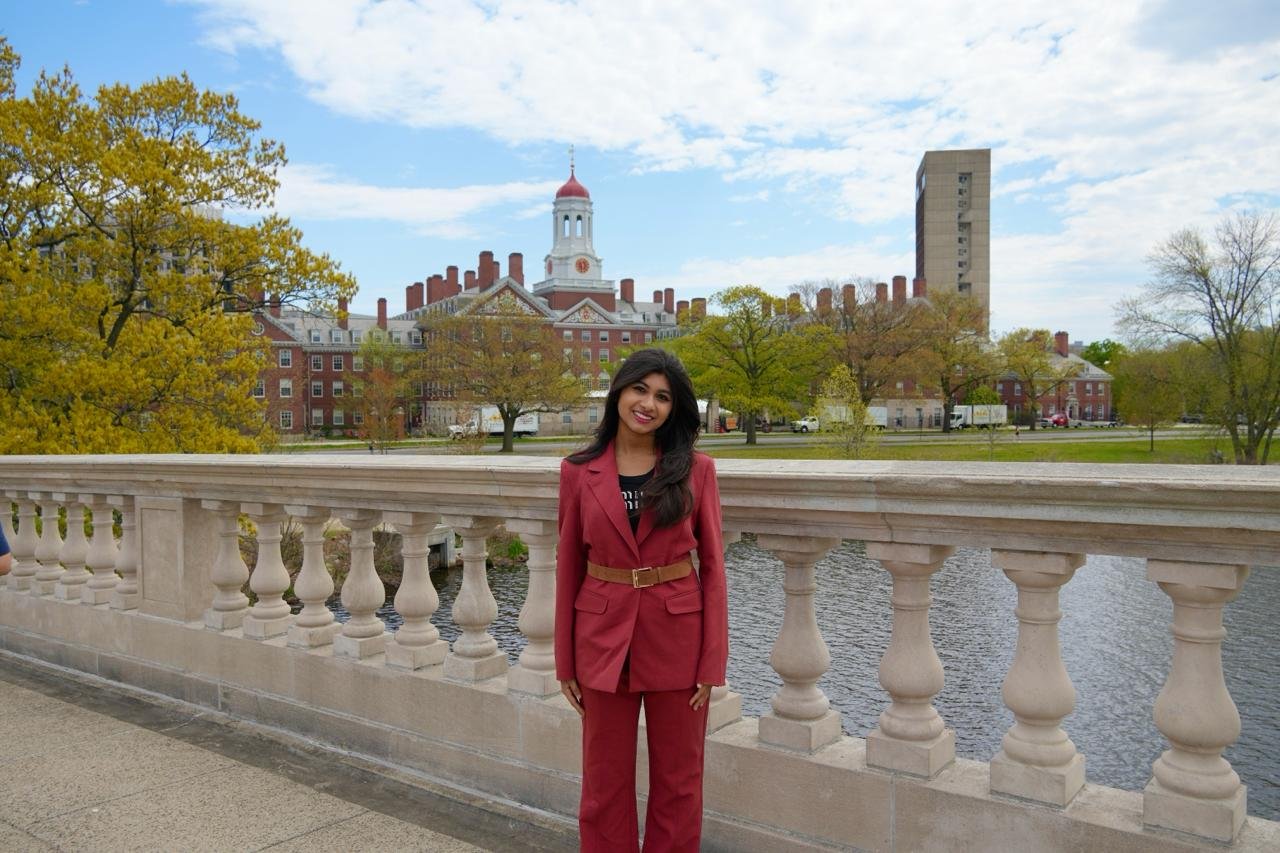
My name is Antara Martins and I am a sophomore at Harvard living in Leverett House studying Government and Philosophy. I was born and raised in London, UK, and was a big debater in high school, captaining my school’s team and competing around the UK. I compete for Harvard’s Intercollegiate Model United Nations Team (ICMUN) and last year I was the Assistant Director for both the Historical Economic and Social Council (HECOSOC) at HMUN and the Hunger Games Specialized AdHoc Committee for HNMUN. I also served as an Under-Secretary-General for HMUN Dubai 2027. Outside of MUN, I compete on the Mock Trial team where I serve as their Seminars Director, organizing our educational program for high school students. In my free time I love to read, to binge rom-coms and spend my evenings laughing with my amazing friends. I am so excited to welcome you to what I am sure will be the best committee yet!
Sincerely,
Antara Martins
Director, Economic and Financial Committee
ecofin@harvardmun.org
Harvard Model United Nations 2027