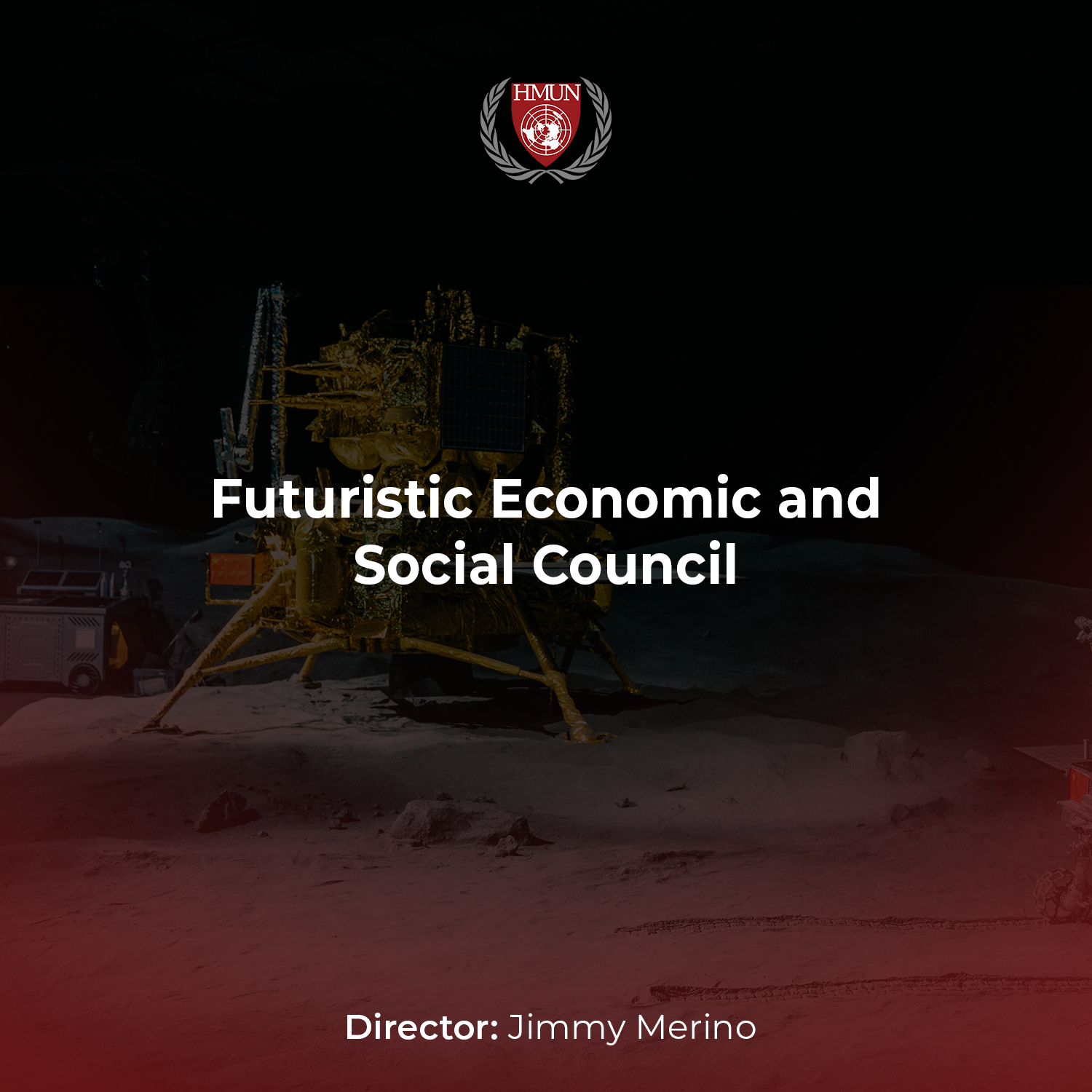
Futuristic Economic and Social Council
Topic Summary
As Earth approaches environmental tipping points, the global population is expected to surpass 10 billion people, and the once distant idea of colonizing space now becomes a reality. With multinational corporations and governments trying to establish lunar and Martian settlements, the world in 2070 faces a new reality – one of building and regulating the systems that will sustain life beyond Earth.
Delegates in the United Nations Office for Outer Space Affairs (UNOOSA) will grapple with the urgent and complex task of governing humanity’s expansion beyond Earth. They will also explore how nations and corporations develop sustainable off-world infrastructure -- such as power systems, transportation networks, and digital communications -- while also managing the legal, environmental, humanitarian, and ethical implications of space colonization.
This committee will also dive into the growing issue of interplanetary inequality, including which nations and actors have access to space development and who benefits from emerging space-based economies. Topics such as the privatization of asteroid mining, the use of outer space as a site for carbon offloading, and the establishment of a universal legal framework for space will all shape the flow of committee.
Ultimately, this committee will investigate critical debates around sovereignty, resource control, and ethical governance in extraterrestrial settings. What role should the United Nations play in regulating space settlements and infrastructure? Should Martian or lunar cities be treated as independent entities, corporate zones, or extensions of Earth-bound governments? And how can we prevent the repetition of Earth's colonial injustices on a new frontier?
Dearest Delegates,
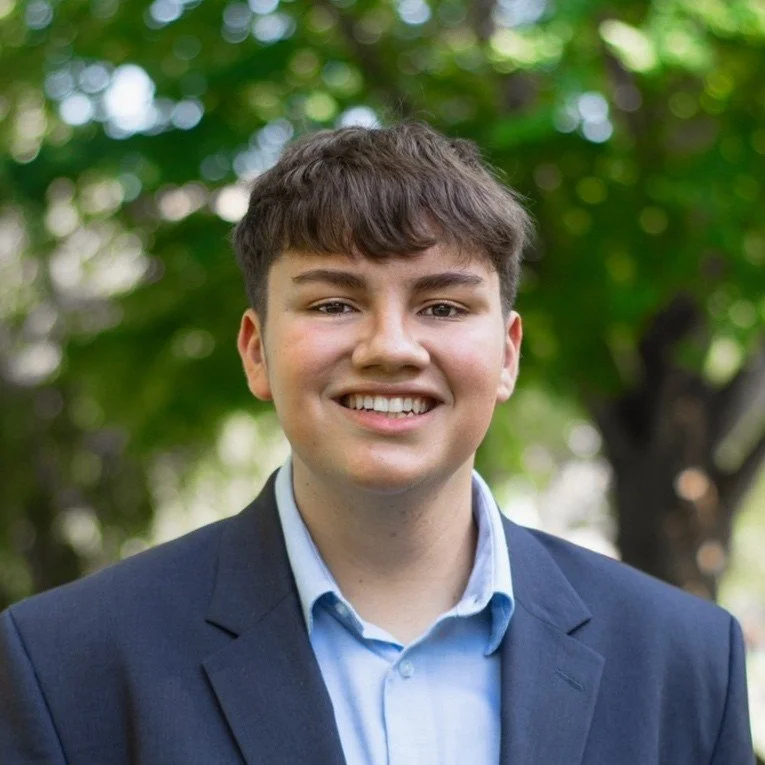
Welcome to Harvard Model United Nations Boston 2026, and the United Nations Office for Outer Space Affairs (UNOOSA), taking place in 2070! My name is Jimmy Merino, and I am incredibly excited to serve as your Director for this committee. I’m currently a sophomore at Harvard College, studying Government and Economics.
Growing up in Boston, Massachusetts, I saw firsthand how access to opportunity often depends not just on ambition or intelligence but on the environment you grow up in. Whether it is the quality of our public schools or gaps in healthcare access, I learned early on that where you’re born can define what you have access to. This realization has inspired my ongoing work in public policy and youth civic engagement.
At Harvard, I am an active member of our Model United Nations community. What I love most about MUN is how it pushes us to understand the world through perspectives other than our own. I look forward to seeing how you all adapt to HMUN’s unique structure and engage with each other.
I urge you to bring your most creative, critical, and compassionate thinking to the committee. Challenge one another. Learn from your peers. Think beyond competition and towards collaboration. The issues we’ll be discussing in this committee aren't hypothetical but actively shape our world. You have the power to shape how our world moves forward.
I’m honored to have the opportunity to learn alongside you and get to know each and every one of you. You all bring unique perspectives, and I am looking forward to hearing from you!
Warmly,
Jimmy Merino
Director, United Nations Office for Outer Space Affairs (2070)
Harvard Model United Nations 2026