Historic Economic and Social Council, The Berlin Conference of 1884
Topic: The Scramble for Africa: Sovereignty and the Price of Empire
In 1884, representatives from major European powers gathered in Berlin to establish rules for colonial expansion in Africa, a moment that would become one of the most consequential turning points in modern African history. As European empires competed for territory, resources, trade routes, and political influence, the conference sought to reduce conflict among colonial powers while formalizing systems of control over African lands. Delegates will confront questions surrounding territorial claims, economic interests, governance structures, and the competing ambitions of nations such as Britain, France, Portugal, Belgium, Germany, and others.
This committee will challenge delegates to debate the division of African territory while also considering the consequences of colonial rule, including the role of traditional colonies, protectorates, and limited self-governance. Delegates must balance national interests with diplomatic strategy, addressing disputes such as control over the Congo River Basin and Portugal’s proposed “Pink Map,” while also considering how colonial governance will affect African societies, economies, and political autonomy. Ultimately, delegates must decide not only how Africa will be divided, but what principles, if any, will guide the future of governance, trade, and sovereignty on the continent.
Dear Delegates,
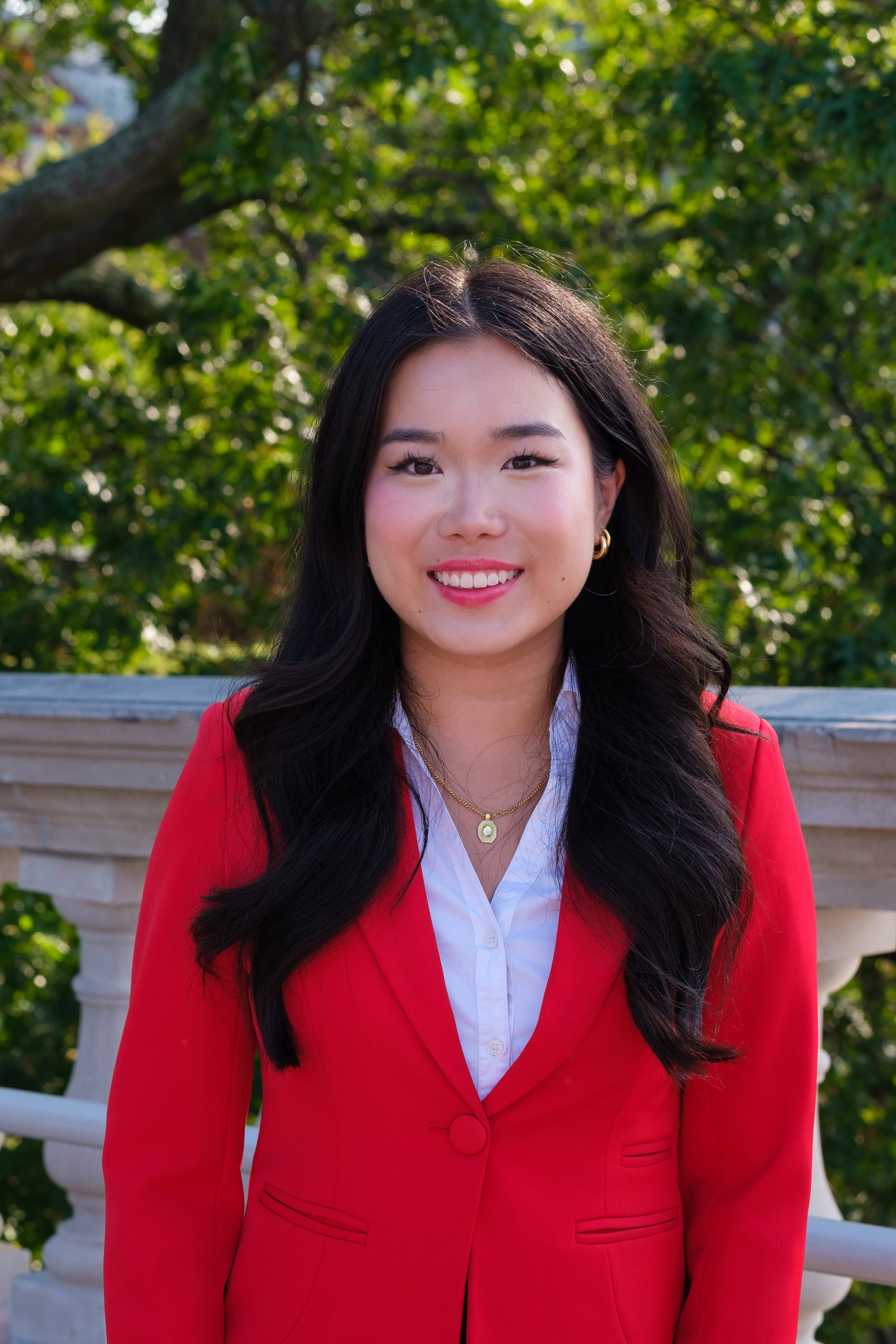
My name is Emily, and I am a junior in Eliot House from Toronto, Canada, studying Economics and Neuroscience. I first discovered Model United Nations in grade 9 and have been deeply involved in the activity ever since. At Harvard, I compete with the Intercollegiate Model United Nations team and have staffed both HMUN and HNMUN. I am excited to serve as Director of the Berlin Conference of 1884 at HMUN 2027, and I also look forward to returning as Under-Secretary-General for Operations at HNMUN 2027 and serving as Director-General of HMUN China 2026.
I am especially excited to direct a historical crisis committee that asks delegates to confront the diplomacy, ambition, and violence behind European imperial expansion in Africa. Through the Berlin Conference of 1884, I hope delegates will examine how questions of sovereignty, economic power, territorial control, and international legitimacy shaped the modern world, while also thinking critically about the voices and peoples excluded from the negotiating table. I look forward to seeing delegates navigate one of the most consequential diplomatic gatherings of the nineteenth century.
Outside of Model UN, I am involved in consulting organizations, the Harvard Undergraduate Clean Energy Group, policy research, and the Asian American Dance Troupe. I am also interested in the intersections of economic development, law, public policy, and global governance. In my free time, I enjoy playing ice hockey, drawing, hiking, baking, exploring new restaurants, visiting art museums, and pretending that buying another matcha is a productive life choice. I cannot wait to meet delegates in January and see this committee come to life.
Sincerely,
Emily Chen
Director, Historical Economic and Social Council, United Nations Atomic Energy Commission
hecosoc@harvardmun.org
Harvard Model United Nations 2027