Inter-American Commission on Human Rights
Topic Summary
Enforced disappearance represents one of the most serious human rights violations; it does not refer merely to the abduction of an individual away from public view, but also to the suffering endured for generations by families left without answers. In Latin America, thousands of individuals were disappeared during periods of political repression, internal conflict, and dictatorship. Decades later, the consequences continue to be felt, both within the legal system and transitional justice processes, but also as collective trauma and memory of entire societies.
This committee will examine the lasting implications of enforced disappearances on communities and how regional and international human rights frameworks respond to them. Delegates will discuss the role of truth commissions, the necessity for reparations, and the responsibilities of states under international law. Most importantly, they will consider how memory itself serves as an instrument of justice, and how societies can confront the past without becoming imprisoned by it. From mothers looking for their children to survivors providing testimony, memory has emerged as an essential countermeasure to impunity. These memories are not solely personal - they are political, defining how societies reflect on their past and shape their future.
Esteemed delegates,
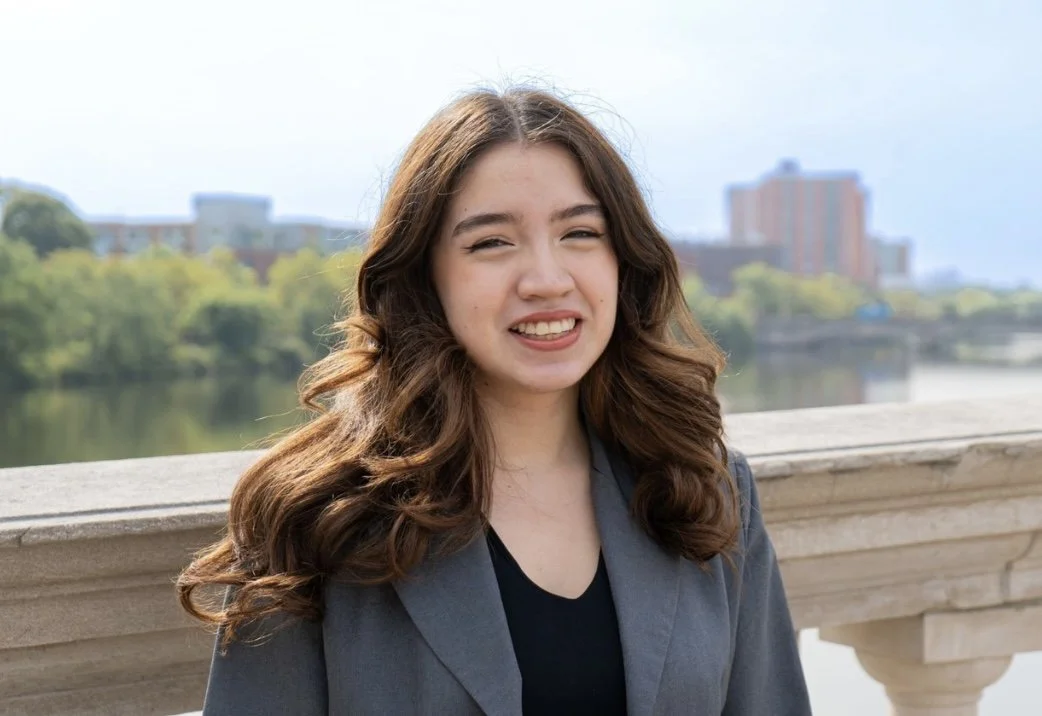
Welcome to Harvard Model United Nations 2026. My name is Rocio Jimenez, and I am excited to be your Director for the Inter-American Commission on Human Rights. I look forward to hearing the arguments each one of you brings to the table in our committee, and I hope you see this conference as an opportunity for growth, learning, and collaboration.
I was born and raised in Tucuman, Argentina. I am currently a Junior at Harvard College studying Economics and Government. During high school in Argentina, I discovered my passion for public speaking, international relations, and social sciences in general. That allowed me to start looking at things with a global viewpoint, researching current pressing issues, and learning from people with very different perspectives. It even motivated me to apply to universities in the U.S.A., hoping to be able to learn in a diverse and supportive environment.
I have been involved in MUN since my freshman year at Harvard. First, I served as an Assistant Director, and later as a Director for HMUN China, HNMUN Latin America, and most recently, HMUN and HNMUN 2025. Being part of these conferences has been one of the most rewarding aspects of my college experience so far, and I am thrilled to be returning to HMUN in this role. Apart from MUN, I dance in Harvard College Candela Latin Dance Troupe. In my free time, I enjoy reading, listening to musical theater soundtracks, learning languages, and writing.
This year, our committee will work on the challenging and deeply meaningful topic of Enforced Disappearance and Collective Memory. As we explore how states, societies, and communities deal with the traces of human rights violations, I encourage you to approach our conversations with empathy, historical awareness, and a commitment to justice. The right to know the truth, the importance of memory, and the demand for accountability are central to the debate about human rights in the Americas, and your mission as delegates will be to engage with these complexities thoughtfully and constructively.
I urge you to come prepared, not only with research and policy positions, but also with an open mind and an inclination to listen. Our committee will only be as powerful as the ideas and energy each of you brings. During debate, stand up for your position, challenge each other respectfully, and always be aware of the practical ramifications of the questions we are discussing. Remember that your contributions have the potential to shape the course of our discussion.
I look forward to meeting all of you and embarking on this thrilling journey together. Here’s to an unforgettable conference ahead!
Sincerely,
Rocio Abigail Jimenez
Director, Inter-American Commission on Human Rights
iachr@harvardmun.org
Harvard Model United Nations 2026