World Bank Group
October Topic: Methods to Reduce World Poverty to 3% by 2030
The World Bank has set an ambitious goal: to reduce global extreme poverty—defined as living on less than $1.25 a day—to under 3% by 2030. Considerable progress has already been made, with the share of people in extreme poverty falling from 52% in 1981 to 21% in 2010. Yet this progress is uneven. East Asia has seen dramatic reductions, while Sub-Saharan Africa remains home to nearly half of the world’s extreme poor. Challenges such as corruption, weak governance, and vulnerability to external shocks—whether natural disasters, financial crises, or pandemics—continue to impede progress.
To achieve the 2030 target, the international community must rethink its strategies. Options include refining poverty measurements, ensuring more equitable aid distribution, and addressing “moral hazard”—the risk of rewarding poorly performing governments with more aid. Delegates must debate whether to maintain the $1.25/day benchmark or adopt broader indicators like inequality measures, while also considering the balance between global frameworks and country-specific approaches. Ultimately, the debate centers on how the World Bank can most effectively mobilize resources, foster sustainable growth, and empower developing nations to break cycles of poverty without fostering dependency.
December Topic: Balancing Natural Disaster Relief and Long-Term Development in the Philippines
The devastation of Typhoon Haiyan in 2013 highlighted the recurring dilemma facing international institutions: how to balance immediate humanitarian relief with long-term development goals. The storm killed over 6,000 people, displaced nearly a million families, and caused an estimated $2 billion in damages. Emergency relief provided food, water, and shelter, but it also diverted resources and attention from ongoing development projects in education, sanitation, and infrastructure. The World Bank, as one of the Philippines’ largest creditors, responded with a $500 million loan tied not only to relief but also to sustaining pre-existing development initiatives.
This integration of short-term aid with long-term planning represents a new approach but raises difficult questions. Should loans prioritize rapid relief or continue to reinforce broader development goals? How can aid be distributed fairly across regions without being hindered by corruption and bureaucracy, which have historically slowed Philippine recovery efforts? Delegates must grapple with these tensions, considering how disaster-prone countries can be supported in ways that preserve resilience, prevent setbacks in poverty reduction, and ensure that immediate aid contributes to sustainable recovery rather than dependency.
Coming soon
Dear Delegates,
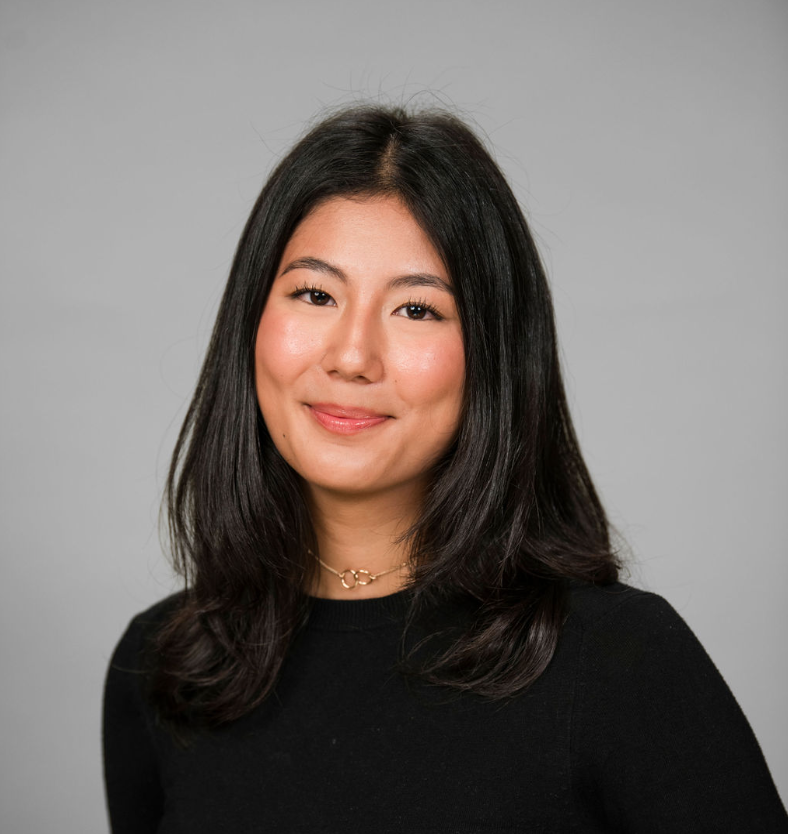
It is my pleasure to welcome you to the World Bank for the 2025 session of Harvard Model United Nations! I am honored to serve as your Director, and I look forward to working with you over the course of our time together.
My name is Romi Chaovat. I am a rising sophomore living in Cabot House, and I study Molecular and Cellular Biology on the pre-medical track. Model UN has been a part of my life since my sophomore year of high school, and although I never attended Harvard Model UN as a delegate, my experience as a staffer became a highlight of my time at Harvard. As Model UN was a transformative experience for me in high school, I knew I wanted to continue it in college, so I jumped at the opportunity to get involved. In my freshman fall, I joined Harvard’s Intercollegiate Model UN (ICMUN) team as a delegate, and last year, I directed a Historical ECOSOC of the United Nations Commission on Crime Prevention and Criminal Justice (CCPCJ) at HMUN. These enriching and thought-provoking experiences encouraged me to extend my involvement further and continue as a senior staffer of HMUN Online. I hope to use all of the skills and lessons I have developed over this time to deliver a rewarding and enriching experience that honors your hard work.
Aside from Model UN, I plan to continue my volunteer work on campus through the Phillip Brooks House Association’s ExperiMentors program, where I teach weekly science lessons and lead hands-on experiments to local elementary classes. I also partake in several research-focused groups on campus, particularly those with STEM-facing projects, such as the Harvard Undergraduate Biotechnology Club. This summer, I am applying my research skills as I intern at the Structural Nanotechnology Laboratory at New York University, aiming to deepen my understanding of interdisciplinary STEM fields.
I want to emphasize that I am here for you every step of the way, so please reach out to me with any questions or concerns, no matter how big or small. I look forward to meeting you all!
Sincerely,
Romi Chaovat