World Health Organization
October Topic: The Illegal Organ Trade
The illegal organ trade has become a multi-billion-dollar global black market, fueled by rising demand for transplants and limited legal supply. The World Health Organization estimates that roughly 10% of all kidney transplants worldwide—around one every hour—are acquired illegally. Vulnerable populations, such as the poor, migrant workers, and homeless individuals, are often coerced, deceived, or financially pressured into selling organs, while recipients face severe medical risks due to unsanitary and unregulated procedures. The practice not only violates human rights but also exacerbates global inequities by allowing wealthier patients to exploit the bodies of the poor.
Despite numerous UN resolutions and WHO guidelines, the trade persists, sustained by corruption, weak enforcement, and ethical divides over organ commodification. Some countries, like Iran, regulate organ sales domestically, while others strictly ban them, raising questions of sovereignty and morality. Potential solutions range from stricter international enforcement and harmonized legal frameworks to increasing the domestic organ supply through presumed consent systems or public awareness campaigns. Delegates must grapple with complex ethical, cultural, and legal questions while seeking practical steps to dismantle trafficking networks and protect the world’s most vulnerable.
December Topic: Malaria in Sub-Saharan Africa
Although eradicated in much of the developed world, malaria remains one of the deadliest diseases in Sub-Saharan Africa, killing an estimated child every minute in the region. In 2010 alone, there were 219 million cases globally, with around 660,000 deaths—overwhelmingly concentrated in Africa. The disease places a staggering economic burden on the continent, costing an estimated $12 billion annually in lost wages and productivity. Despite progress through initiatives like Roll Back Malaria and the distribution of insecticide-treated nets, efforts have plateaued due to insufficient funding, weak healthcare systems, and growing resistance to drugs and insecticides.
The international community faces a critical choice: whether to commit greater financial and political capital to eliminate malaria or risk reversing decades of progress. Solutions must address not only the provision of bed nets and treatments but also the strengthening of healthcare systems, cross-border cooperation, and research into vaccines and new insecticides. Malaria eradication is achievable but requires coordinated global action. For delegates, the debate will hinge on balancing sovereignty with collective responsibility, mobilizing resources, and ensuring that solutions are both equitable and sustainable
Dear Delegates,
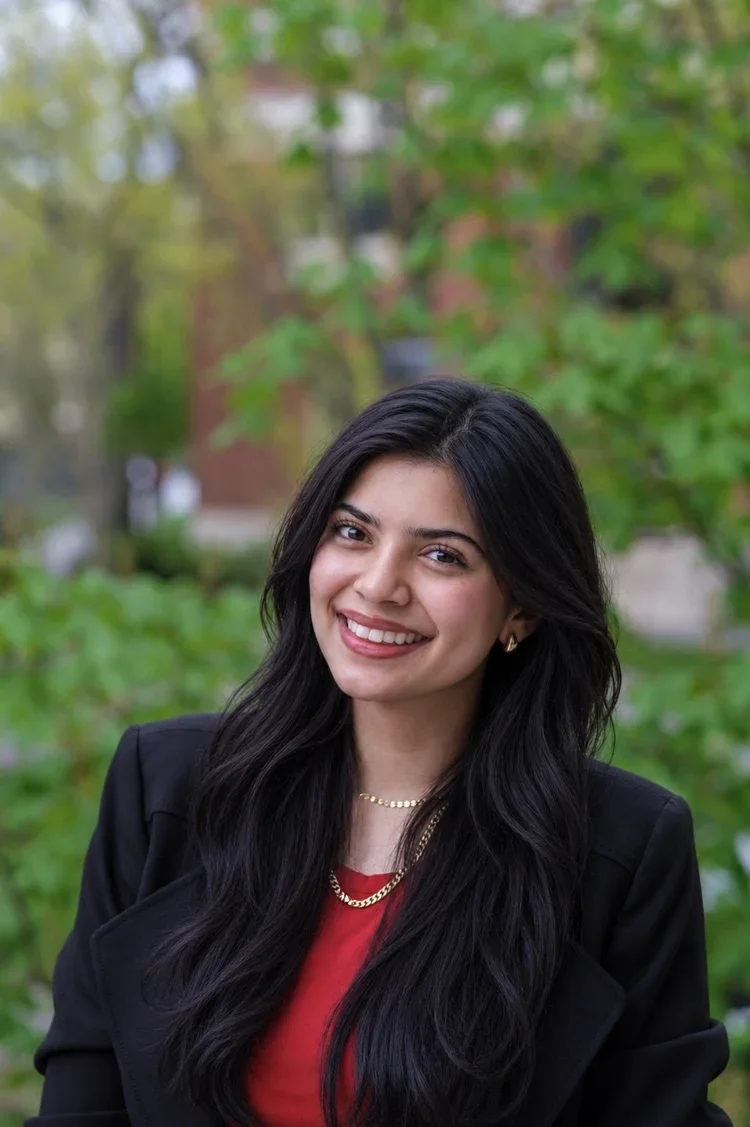
I am beyond excited to welcome you to the World Health Organization of Harvard Model United Nations Online 2025! My name is Natalie Coon, and I am truly honored to be your Director for this conference. I look forward to hearing the engaging debate and thoughtful arguments you prepare as you consider some of the most pressing issues facing society in the world. Whether you have much Model United Nations experience or this is your first conference, I am confident that this will be an unforgettable experience full of growth, learning, and personal development.
To tell you more about myself, I was born and raised in a small town in Wisconsin. Now, I am a junior at Harvard College double concentrating in Psychology and Government. On campus, I can be found participating in extracurricular activities such as the Harvard Political Review and The Crimson or working as a tour guide or at my internship with the Harvard Graduate School of Education. I also love adventure, so spending time outdoors and traveling are quite common occurrences! Within Model UN, I have served several roles, including being a Director and on Secretariat of HMUN China and HMUN Australia, and I look forward to my role as Under-Secretary-General of Operations at HMUN Boston 2026.
Within this committee, I am excited to see diplomacy and teamwork among delegates representing different countries with different views and circumstances. Remember, Model UN is not just about representing a country's interests, but about understanding the complexities of international relations and working towards consensus-based solutions. It is of great importance that resolutions are made with respect, flexibility, and research as you navigate through debates and negotiations. Ultimately, your participation in this committee will help you gain valuable insights in real world situations. Good luck, and I look forward to meeting you soon!
Sincerely,
Natalie Coon
Dearest delegates,
Welcome one and all to HMUN Online 2025! My name is Emily Chen, and I am a sophomore at Harvard College from Toronto, Canada, planning to study Economics and Environmental Science and Public Policy. I am incredibly excited to serve as your Director for the World Health Organization (WHO) this year.
I thought I would take this opportunity to tell you a little bit more about who I am and the journey that led me to both Model United Nations and Harvard. As a child, I was full of ideas and, but I was rather shy and often too scared to speak up. To conquer this childhood fear, I enrolled in my first debate class as high school approached. Since then, I have participated in all kinds of public speaking activities such as competitive debate, mock trials, and speech competitions, but no activity quite stole my heart like MUN did. After joining my school’s MUN club in my first year of high school, I quickly fell in love with its dynamic and challenging mix of research, diplomacy, cooperation, writing, and public speaking skills. At Harvard, I have continued my involvement in this activity, competing as a part of the travelling Intercollegiate Model United Nations team, staffing HMUN and HNMUN 2025 in Boston, HMUN China 2025, and serving on the HNMUN 2026 Secretariat. These MUN spaces have been instrumental in providing me with tight-knit and welcoming communities as well as more opportunities to learn and grow.
Throughout this conference, my hope is that delegates will tackle multi-faceted approaches and solutions to the issue at hand. I challenge you to think critically, listen actively, and collaborate boldly. Whether this is your first conference or your tenth, your perspective matters, and your voice has power. I am beyond excited to hear your ideas and see the passion you bring to committee. Let us make this a weekend of good diplomacy, ambition, and real collaboration. See you soon!
Sincerely,
Emily Chen